Success Stories
How Siemens Healthineers scales its global classification volume with AI
3. Juni 2026
3Minutes reading time
Success Stories
3. Juni 2026
3Minutes reading time

Healthcare
Siemens Healthineers is a leading global medical technology company delivering products and solutions to more than 70 countries. The company employs over 50,000 people across locations on all continents.
Growing volume
Skills shortage
Audit compliance
Global scaling
Erlangen, Germany (Global)
50,000+
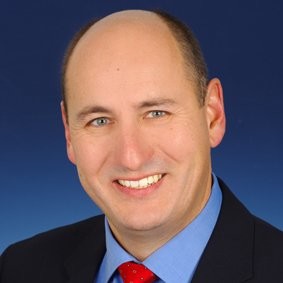
Hans Freyer
"Process Manager ECC Classification Siemens Healthineers
The volume of customs tariff numbers, HS code classifications, and export control classifications at Siemens Healthineers is continuously rising, driven by a growing product portfolio and an increasingly complex geopolitical environment. Stricter import and export checks, new regulations, and rising requirements for audit security are increasing the pressure on classification teams.
At the same time, the market for qualified customs classifiers is extremely limited. To make matters worse, a mere customs tariff number is not enough. Each classification must be documented with a complete justification, references, and a commercial description in order to withstand customs audits and remain internally traceable.
“The classification volume is increasing dramatically, and getting suitable classifiers from the market is a very limited situation."
Markus Seelos, Head of Global Classification Unit, Siemens Healthineers
traideCompliance is an AI platform for audit-ready customs classification that delivers customs tariff numbers with complete legal justifications, references, and automatically maintained foreign trade core data, directly integrable into existing ERP systems.
The first contact between Siemens Healthineers and traide AI occurred in 2022 at a specialist congress – a conversation about how AI could be used in customs classification and customs classification. Both sides quickly realized that this is an ideal field of application. After a successful proof of concept, joint further development began.
Since 2023, Siemens Healthineers has been using traideCompliance in all three global classification regions. The AI-supported classification not only automates the assignment of customs tariff numbers and ECCN codes, but also provides complete AI justifications, references, and commercial descriptions, with all results audit-ready and documented in the core data. The goal: a company-owned AI that becomes increasingly precise through continuous data input.
“It is not about just getting a tariff code. We need the justification, we need references – we were on the same wavelength from the very beginning."
Hans Freyer, Process Manager ECC Classification, Siemens Healthineers
The team is using the platform increasingly intensively. In recent months, the focus has been on systematically feeding the system with relevant product data, with the clear objective of successively integrating AI deeper into daily customs classification work.
3 regions on a single shared classification platform
14 classifiers in 3 countries
Since 2023 - active collaboration with growing intensity of use
Scaling of classification volume despite a limited market for qualified professionals
Audit-ready classifications with complete AI justification and references for every decision
Consistent foreign trade core data quality across all three global regions
Building a company-owned AI foundation through continuous data integration
The decision to go with traide AI was not made despite its startup character, but also because of it. The close cooperation, short iteration cycles, and the shared ambition to build a truly robust system for customs classification convinced the team at Siemens Healthineers.
traide AI does not just supply a customs tariff number. The platform provides complete legally compliant justifications that stand up to both internal and external customs audits – exactly what global compliance teams with complex product portfolios need.
“We work closely with traide to make truly relevant data usable and to successively integrate AI more into our work - with the goal of getting as much as possible out of the system."
Tina Jakob, Head of Trade Classification & Advisory EMEA, Siemens Healthineers
traideCompliance automates the assignment of customs tariff numbers (CN nomenclature) including a complete, legally compliant AI justification. This allows classification teams to process a significantly higher volume without a proportional increase in personnel costs.
Yes. traideCompliance delivers a complete AI justification with references to the decisive chapters of the customs tariff for every classification – including GRI 1-6, explanatory notes, and BTI references. All results are documented in the customs core data and are thus seamlessly traceable for import and export audits.
The platform supports the classification of customs tariff numbers (CN nomenclature / HS codes in an international context) as well as dual-use goods numbers under EU export control law. For the US market, ECCN codes (Export Control Classification Number) are additionally supported. Goods, technologies, and software are all covered.
traideCompliance is designed for medium to large enterprises with high classification volumes – typical starting from 200 new products per month and 2-5 customs experts in the team. The platform also scales for global corporations: Siemens Healthineers uses traideCompliance in all three global classification regions to classify a product portfolio in the six-figure range.
The implementation begins with a structured Proof of Concept – typically going live within two to four weeks. After that, the platform can be rolled out gradually to additional product lines, regions, or ERP systems. For those who do not require ERP integration yet, you can start immediately with traideStarter – with no technical setup, in less than a minute.